Homeschool Research & Statistics
Homeschool Research & Statistics…
Socialization: A Great Reason Not to Go to School
This "Learn in Freedom" article provides research supporting the positive socialization homeschooled children receive. Discusses research supporting the conclusion that homeschooled children have higher levels of self-esteem and communication skills, and fewer behavioral problems, than other children.
Education Resources Information Center (ERIC)
The Education Resources Information Center (ERIC), sponsored by the Institute of Education Sciences (IES) of the U.S. Department of Education, produces the world’s premier database of journal and non-journal education literature. The ERIC online system provides the public with a centralized ERIC Web site for searching the ERIC bibliographic database of more than 1.1 million citations going back to 1966. More than 107,000 full-text non-journal documents (issued 1993-2004), previously available through fee-based services only, are now available for free.
The Case for Authentic Assessment
Assessment is authentic when we directly examine student performance on worthy intellectual tasks. Traditional assessment, by contract, relies on indirect or proxy 'items'--efficient, simplistic substitutes from which we think valid inferences can be made about the student's performance at those valued challenges.
Homeschooling: A Growing Option in American Education
Homeschooling is chosen by families for reasons like apprehensions about school environments, dissatisfaction with academic instruction, and a wish for religious and moral guidance not found in traditional schools. The decentralized homeschooling population complicates researchers' efforts to draw definite conclusions about its effect on outcomes, including academic achievement. Nevertheless, assessments consistently highlight the strong academic performance of homeschooled students.
U.S. Department of Education Longitudinal Study of 2002: Homeschool Student Questionnaire
This is a survey sponsored by the U.S. Department of Education, with a stated goal of being used by educators and by federal and state policy makers to address important issues facing the nation's schools: educational standards, high school course-taking patterns, dropping out of school, the education of the disadvantaged, the needs of language minority students, and the features of effective schools. We are including this link as an item of interest, to demonstrate what directions institutional survey writers are taking in their approach to homeschooling. In our opinion, it is a completely inadequate attempt to measure homeschooling demographics or success, focusing heavily on cultural notions of "socialization" and structured educational models. It is also invasive in terms of the amount of personal information required.
Homeschoolers: Estimating Numbers and Growth 1999
This technical paper provides an estimate of the number of children in homeschooling. Of particular note is their estimate of the numbers of children with any type of homeschooling experience. Based on an estimate of an average turnover rate of 2 years, this study estimates that the number of children with some homeschooling experience, by age 18, would be around 6 to 12 percent of the population. The study also looks at the filing status of homeschoolers in various states and the possible under-estimation of non-filers.
Homeschooling Grows Up
Homeschooling Grows Up is the largest research survey to date of adults who were home educated. Over the last decade, researchers, professionals, parents, the media, and many others have asked repeatedly: How do homeschooled students turn out? Can a homeschool graduate get into college or get a job? How do they fit into society? Are they good citizens? Are they happy? In 2003, HSLDA commissioned Dr. Brian D. Ray, president of the National Home Education Research Institute, to conduct a study to answer these questions. The results of his research demonstrate that homeschoolers are succeeding.
Homeschool Statistics and Achievements
The Home Education Foundation has several reports detailing statistics on home education in America.
Scholastic Achievement and Demographic Characteristics of Home School Students in 1998
This report presents the results of the largest survey and testing program for students in home schools in 1998.
Homeschooling and Socialization Revisited
Richard G. Medlin, a psychology professor at Stetson University, continues a line of inquiry he began in one of the landmark articles of the original 2000 Peabody Journal homeschooling special issue. Since that article he has published several pieces in the journal Home School Researcher, all of which find very positive results for homeschoolers’ social and academic development. In this piece his goal is to review research on homeschooler socialization that has appeared since his 2000 article.
Homeschooling Grows in the Black Community
The best research on homeschooling indicates the total number of children who are homeschooled is 1.5 to 2 million, and that number is growing by 10 to 15 percent per year. But not everyone recognizes the academic and social success of homeschoolers and some criticize the movement as being white and elitist. While it's true that the large majority of homeschool children are white, the number of black homeschoolers is growing rapidly. Brian Ray, president of the National Home Education Research Institute, estimates that there are 30,000 to 50,000 black children being homeschooled today. Others estimate that black homeschoolers make up 5 percent of the total homeschool population. Most importantly black homeschool movement is growing at a faster rate than the general homeschool population.
The Rise of Home Schooling Among African-Americans
Significant growth in black families’ participation in home schooling is beginning to show up on the radar screens of researchers. The National Center for Education Statistics computed African-Americans as 9.9 percent of the 850,000 children the federal agency figured were being home-schooled nationally in 1999. Veteran home-schooling researcher Brian Ray figures blacks are currently about 5 percent of the 1.6 million to 2 million home-schooled children but he agrees that black home schooling is growing rapidly.
Homeschooling - ERIC Digest
This Digest discusses the extent of contemporary homeschooling and its legal status, describes available resources, presents evidence on the performance of homeschoolers, and notes how public opinion regarding the practice has changed over time.
Home Schooling and the Question of Socialization
Virtually all homeschooling parents will hear the question at some point ... What about socialization? It is a puzzling question to homeschoolers, as the term itself has various meanings. This well-documented paper by Richard G. Medlin takes a look at this question and concludes that homeschooled children certainly are not isolated. In fact, they associate with and feel close to many types of people. Their socialization skills are very good and they demonstrate good self-esteem, confidence, and resiliency.
Home Schooling Works!
20,760 student achievement test scores and their family demographics make this one of the largest study of home education. Results demonstrate that home schooled students are doing exceptionally well and provide an informative portrait of America’s modern home education movement. Conducted by Dr. Lawrence M. Rudner, Director of the ERIC Clearinghouse on Assessment and Evaluation.
Homeschooling Growth in the 1980s
Homeschooling was growing rapidly in the 1980s in the United States, after starting from a very small base.
Statistics on Public School vs. Homeschool
Deciding how your child will receive his education is a choice that can impact the rest of his life. While your decision may depend on personal factors such as your time and availability and your child's personality, evaluating studies and statistics can also provide information you can include in your decision making process.
Cato Institute
The Cato Institute was founded in 1977 by Edward H. Crane. It is a non-profit public policy research foundation headquartered in Washington, D.C. The Cato Institute seeks to broaden the parameters of public policy debate to allow consideration of the traditional American principles of limited government, individual liberty, free markets and peace. Toward that goal, the Institute strives to achieve greater involvement of the intelligent, concerned lay public in questions of policy and the proper role of government.
Homeschooling--It's a Growing Trend Among Blacks
African-Americans are joining the national home schooling community at larger and larger numbers every year. Following a nationwide trend, educating children at home is becoming a popular option for Black Americans as private school costs rise and the reputation of public schools grows worse. Read about the current movement of African-American homeschoolers.
Research Facts on Homeschooling
A summary look at research facts on homeschooling including: general facts and trends, reasons for home educating, academic performance, social, emotional, and psychological development, success in adulthood, and overall success.
Resources
-
 Post-Pandemic Research on Modern American Homeschooling: Diversity within the Ho...
 -
Post-Pandemic Research on Modern American Homeschooling: Demographic Trends and ...
-
 A Kids' Guide to Clinical Research
 -
 The Thinking Tree - Science Handbook and Portfolio: Document your Research, Disc...
 -
Homeschooling Methods: Seasoned Advice on Learning Styles
-
American Literature & Research: 1 Credit High School English Course (Homesch...
-
 Until the Streetlights Come On: How a Return to Play Brightens Our Present and P...
 -
 Project-Based Homeschooling: Mentoring Self-Directed Learners


Featured Resources
-
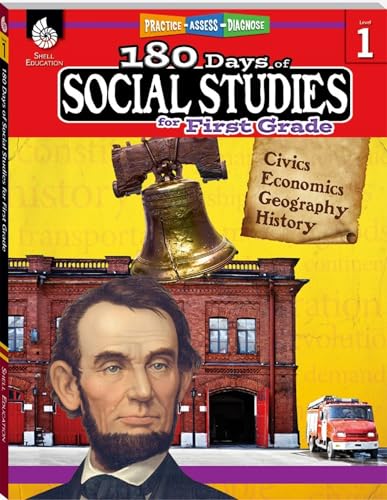
 180 Days™: Social Studies for First Grade: Practice, Assess, Diagnose
 -
 180 Days™: Social Studies for Fourth Grade: Practice, Assess, Diagnose
 -
7th Grade Social Studies: Daily Practice Workbook | 20 Weeks of Fun Activities |...
-
 Evan-Moor Daily Geography Practice, Grade 3, Homeschooling and Classroom Resourc...
 -
 Barron's Math 360: A Complete Study Guide to Pre-Calculus with Online Pract...
 -
 180 Days™: Social Studies for Fifth Grade: Practice, Assess, Diagnose